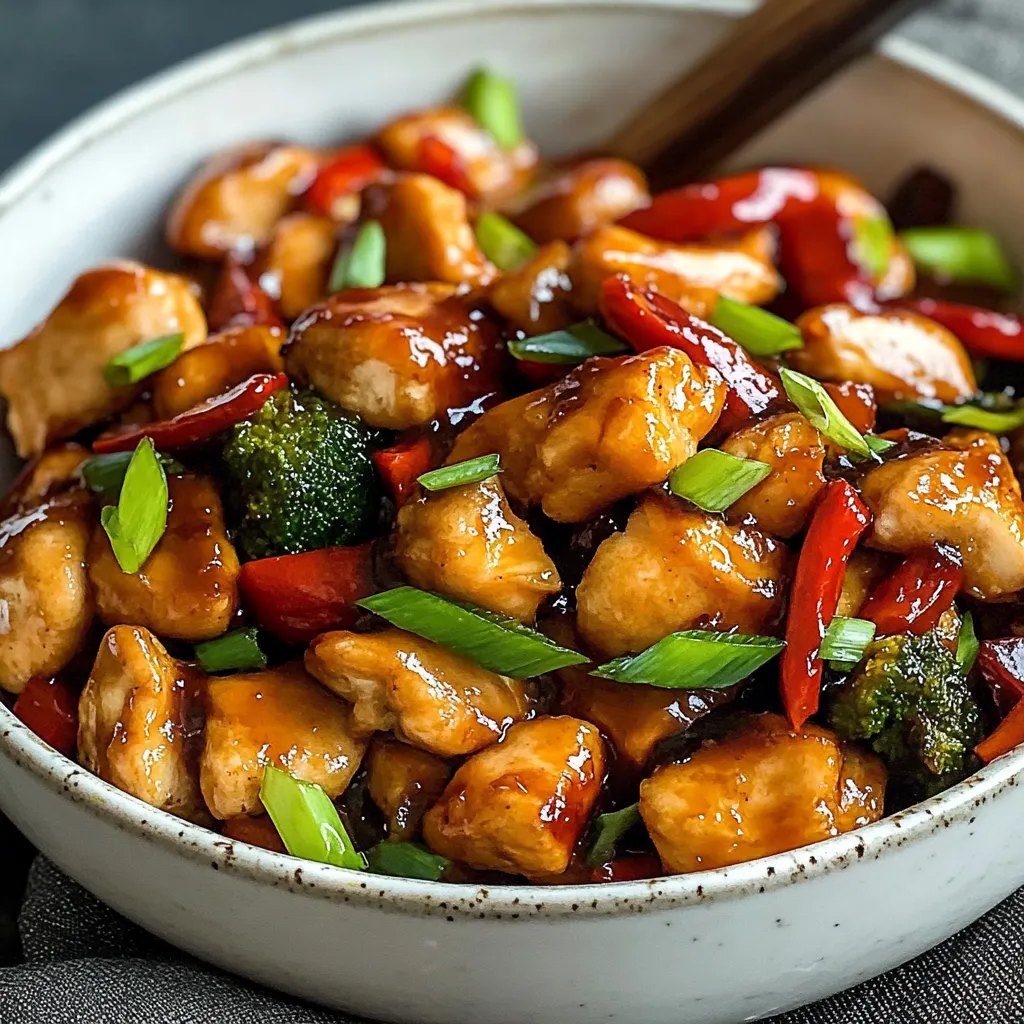
The bold, spicy flavors of this high protein hunan chicken bring restaurant-quality Chinese food straight to your kitchen in just 30 minutes. Tender chicken pieces get coated in a glossy, chile-spiked sauce alongside crisp vegetables that maintain their snap and color. The sauce strikes that perfect balance between savory, tangy, and spicy without overwhelming heat, making this a weeknight dinner that satisfies cravings for takeout while giving you control over ingredients and spice levels.
What makes this recipe particularly appealing is the speed. From slicing your chicken to sitting down with a steaming plate takes half an hour, most of which is active cooking rather than waiting. The high heat and quick cooking preserve the vegetables’ texture while building layers of flavor through proper searing and sauce reduction.
Why You’ll Love This Hunan Chicken
The protein content delivers serious staying power. With a full pound of chicken breast distributed across four servings, each portion provides substantial lean protein that keeps you satisfied without feeling heavy. This matters when you want a filling dinner that doesn’t derail your nutritional goals.
Speed and simplicity define this recipe. Fifteen minutes of prep involves mostly slicing vegetables and mixing a sauce. The cooking itself takes another fifteen minutes of straightforward stir-frying. I find this timing perfect for weeknights when takeout tempts but you know homemade tastes better and costs less.
The flavor profile showcases what Hunan cuisine does best. Unlike sweeter Chinese-American dishes, Hunan cooking emphasizes bold, savory heat with pronounced garlic and ginger. The sauce clings to every piece of chicken and vegetable, creating consistent flavor in each bite rather than pooling at the bottom of your bowl.
Vegetable variety adds both nutrition and visual appeal. The mix of broccoli, bell pepper, carrot, and zucchini provides different textures and colors. Each vegetable contributes its own subtle flavor while the sauce ties everything together. You get crunch, sweetness, and freshness all in one dish.
Customization options make this adaptable to your preferences and what’s available. Adjust the heat level easily by varying the chili paste amount. Swap vegetables based on what needs using in your refrigerator. The technique stays consistent regardless of these modifications.
Ingredients for Hunan Chicken
I always slice my chicken breast against the grain into thin strips, roughly 1/4-inch thick. This ensures quick, even cooking and creates tender pieces rather than chewy chunks. Partially freezing the chicken for 20 minutes before slicing makes achieving uniform thickness much easier.
- 1 lb boneless, skinless chicken breast, thinly sliced
- 2 tablespoons vegetable oil (divided)
- 1 cup broccoli florets
- 1 red bell pepper, sliced
- 1 carrot, thinly sliced
- 1 medium zucchini, sliced
- 3 cloves garlic, minced
- 1 teaspoon fresh ginger, grated
For the Hunan Sauce:
- 1/3 cup chicken broth
- 3 tablespoons soy sauce
- 1 tablespoon oyster sauce
- 1 tablespoon rice vinegar
- 1 tablespoon honey or brown sugar
- 1-2 tablespoons sambal oelek (or chili paste), to taste
- 1 teaspoon toasted sesame oil
- 1 tablespoon cornstarch
The vegetable oil needs a high smoke point since you’re cooking at high heat. Vegetable, canola, or peanut oil all work well. Avoid olive oil, which smokes and develops off flavors at the temperatures needed for proper stir-frying.
For the vegetables, cut everything into similar-sized pieces so they cook at the same rate. The broccoli florets should be bite-sized, the bell pepper in strips about 1/4-inch wide, the carrot in thin coins or matchsticks, and the zucchini in half-moons roughly 1/4-inch thick.
Fresh ginger makes a noticeable difference over dried powder. The bright, zingy flavor of fresh ginger is essential to authentic Hunan taste. Peel the ginger with the edge of a spoon rather than a vegetable peeler to minimize waste, then grate it on a microplane or the smallest holes of a box grater.
Sambal oelek provides the characteristic Hunan heat. Start with 1 tablespoon if you’re unsure about spice tolerance. You can always add more at the table, but you can’t take it out once it’s mixed in. Different brands vary in heat level, so taste your chili paste before committing to an amount.
The cornstarch in the sauce serves double duty. It thickens the liquid into a glossy coating and helps the sauce cling to the chicken and vegetables rather than sliding off. Make sure it’s fully dissolved in the sauce mixture before adding it to the hot pan.
How to Make Hunan Chicken
Success with stir-frying comes from having everything prepped and ready before you turn on the heat. In my experience, once that pan gets hot, things move fast, and stopping to chop garlic or measure sauce leads to overcooked food.
- Whisk together all the sauce ingredients in a small bowl until the cornstarch completely dissolves with no lumps visible. Set this beside your stove where you can reach it easily. The cornstarch settles as it sits, so you’ll need to stir again right before adding the sauce to the pan.
- Heat 1 tablespoon of oil in a large skillet or wok over medium-high heat until it shimmers. The pan should be hot enough that a drop of water sizzles and evaporates immediately. Add the sliced chicken in a single layer, working in batches if necessary to avoid crowding. Crowded chicken steams rather than sears, which prevents browning and creates rubbery texture.
- Let the chicken cook undisturbed for 2-3 minutes until the bottom develops golden-brown color. Flip the pieces and cook another 2-3 minutes until cooked through. The internal temperature should reach 165°F, though the thinly sliced meat cooks quickly and rarely requires checking with a thermometer. Remove the chicken to a clean plate and set aside.
- Add the remaining tablespoon of oil to the same pan. The residual heat from the chicken should still be present, so the oil heats quickly. Add the broccoli, bell pepper, carrot, and zucchini. Stir-fry constantly, tossing the vegetables every 20-30 seconds, for 4-5 minutes. You’re looking for tender-crisp vegetables with some charred edges but still bright colors. The broccoli should be bright green, the carrot slightly softened but with snap remaining.
- Create a small clearing in the center of your vegetables by pushing them to the sides of the pan. Add the minced garlic and grated ginger to this hot spot. Cook for 30-60 seconds, stirring constantly, until you smell the aromatics blooming. The garlic should become fragrant but not brown, as burned garlic tastes bitter.
- Return the cooked chicken to the skillet, distributing it evenly among the vegetables. Give your sauce mixture a quick stir since the cornstarch settles, then pour it over everything in the pan.
- Toss constantly for 1-2 minutes as the sauce comes to a simmer and thickens. You’ll see it transform from thin and watery to glossy and coating. Every piece of chicken and vegetable should be evenly covered with the shiny sauce. If the sauce seems too thick, add a tablespoon of water or broth. If it’s too thin, let it cook another 30 seconds.
- Remove from heat immediately once the sauce reaches the right consistency. Overcooking at this stage can make the sauce gummy or cause the vegetables to become soggy.
What to Serve with Hunan Chicken
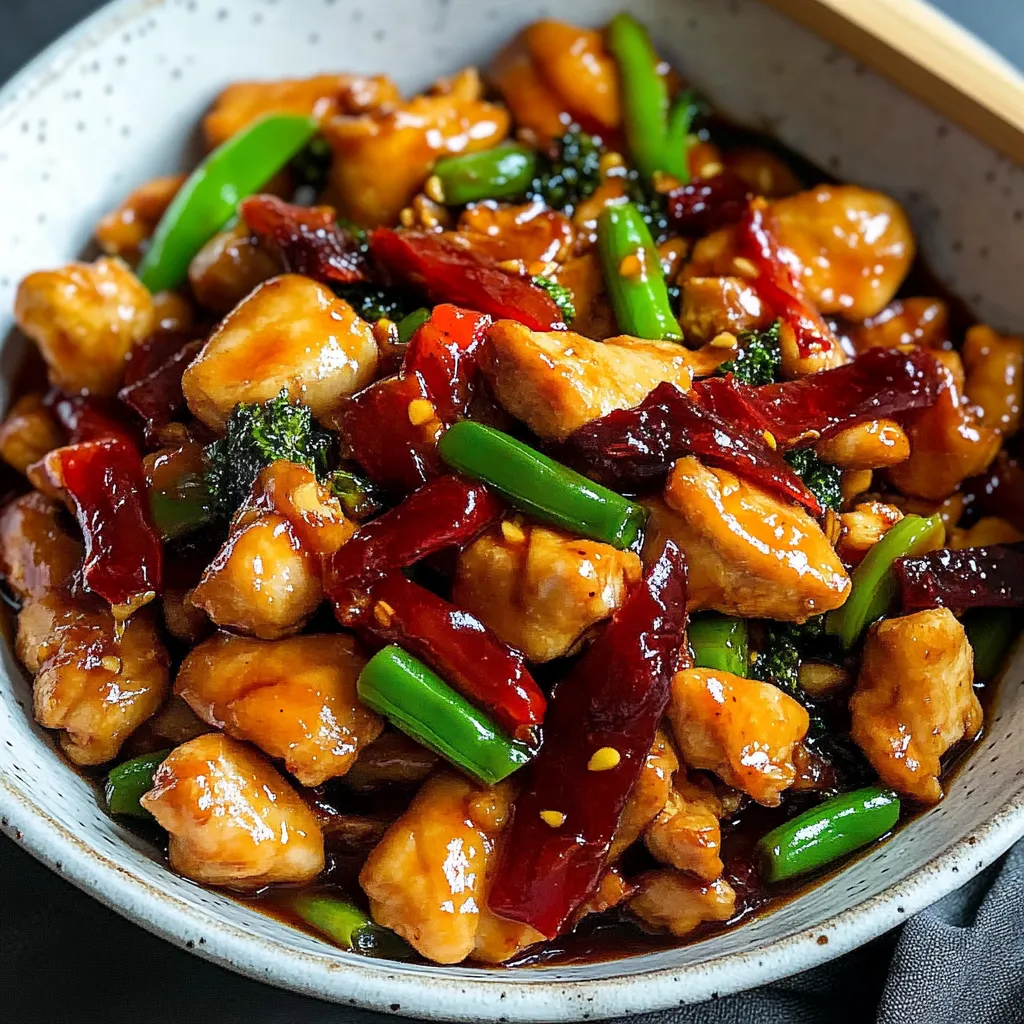
Since Hunan chicken is saucy and flavorful, it pairs best with neutral bases that absorb the sauce and balance the meal.
Steamed White Rice: The classic choice. Jasmine rice works particularly well with its subtle floral aroma that doesn’t compete with the bold sauce. The fluffy grains soak up every bit of the spicy glaze.
Cauliflower Rice: For a low-carb option, cauliflower rice provides the same neutral base without the carbohydrates. Season it simply with just salt and maybe a touch of sesame oil to complement the main dish.
Brown Rice: Adds a nutty flavor and more fiber. The chewier texture contrasts nicely with the tender chicken and crisp vegetables.
Quinoa: Provides extra protein and a slightly different texture. The tiny beads absorb sauce well and add nutritional variety to the meal.
Rice Noodles: Wide rice noodles tossed with a bit of sesame oil create a more substantial, restaurant-style presentation. The slippery noodles work beautifully with the sauce.
Egg Fried Rice: If you want to stay completely in the Chinese cuisine realm, simple egg fried rice turns this into a more complete meal. The mild eggs and rice balance the spicy chicken.
Asian Cucumber Salad: For a cooling side, thinly sliced cucumbers marinated in rice vinegar, sugar, and sesame oil provide refreshing crunch and help temper the heat.
Pro Tips & Variations
Velveting the Chicken: For restaurant-quality texture, toss your raw chicken slices with 1 teaspoon cornstarch, 1 teaspoon soy sauce, and 1 teaspoon oil. Let it sit for 10 minutes before cooking. This coating creates an incredibly tender, silky texture that stays moist even at high heat.
Wok vs. Skillet: A traditional carbon steel wok provides the best heat distribution and allows for proper tossing, but a large, heavy skillet works perfectly fine. The key is using high heat and not overcrowding your cooking surface.
Protein Swaps: Shrimp cooks even faster than chicken, needing just 2-3 minutes total. Thinly sliced pork or beef work with the same technique. Firm tofu, pressed and cubed, creates a vegetarian version that absorbs the sauce beautifully.
Vegetable Options: Snow peas, snap peas, bok choy, mushrooms, baby corn, and water chestnuts all fit naturally into this recipe. Use whatever combination totals about 3-4 cups of vegetables.
Heat Adjustment: Start with 1 tablespoon of chili paste for mild heat, use 2 tablespoons for medium, or go up to 3 tablespoons if you want serious spice. Adding fresh sliced chili peppers along with the garlic and ginger intensifies both heat and flavor.
Gluten-Free Version: Use tamari instead of soy sauce and verify your oyster sauce is gluten-free. Most brands now offer GF versions. Skip the oyster sauce entirely if needed, adding an extra tablespoon of soy sauce or tamari and a pinch of sugar.
Make-Ahead Prep: Slice the chicken and vegetables up to a day ahead, storing them separately in the refrigerator. Mix the sauce and refrigerate it in a sealed jar. When ready to cook, everything comes together in 15 minutes.
Batch Cooking: Double the recipe easily if you have a large enough pan. The sauce scales perfectly, and having leftovers for lunch the next day is never a bad thing.
Storage & Reheating Tips
Store leftover Hunan chicken in an airtight container in the refrigerator for up to 3 days. The sauce thickens as it cools, which actually makes reheating easier since it won’t be as liquidy.
Reheat in a skillet over medium heat rather than the microwave for best results. Add a tablespoon or two of water or chicken broth to the pan to loosen the sauce, then heat for 3-4 minutes, stirring occasionally, until everything is hot throughout. This method preserves the vegetable texture better than microwaving.
If you must use the microwave, heat at 70% power in 1-minute intervals, stirring between each interval. Add a splash of water to prevent drying out. The vegetables will soften more than ideal, but the flavors remain good.
This dish doesn’t freeze particularly well due to the vegetables, which become mushy after freezing and thawing. The chicken and sauce freeze fine, so if you want to meal prep, consider freezing just the cooked chicken in sauce, then stir-frying fresh vegetables when you’re ready to eat.
Leftover Hunan chicken works well served cold over salad greens for a different take on lunch. The bold flavors come through even at room temperature.
This high protein hunan chicken proves that satisfying your craving for takeout doesn’t require ordering in or spending big money. With simple ingredients, straightforward technique, and minimal time investment, you get a dinner that’s both nutritious and full of the bold, spicy flavors that make Chinese food so appealing. The high heat cooking and quick preparation preserve nutrients while building complex flavor that tastes like you spent far more time than you actually did.
Delicious Hunan Chicken
Ingredients
Equipment
Method
- In a small bowl, whisk together all the sauce ingredients (chicken broth, soy sauce, oyster sauce, rice vinegar, honey, sambal oelek, sesame oil, and cornstarch) until the cornstarch is fully dissolved. Set aside.
- Heat 1 tablespoon of oil in a large skillet or wok over medium-high heat. Add the sliced chicken in a single layer and cook for 3-5 minutes until browned and cooked through. Remove the chicken from the pan and set aside.
- Add the remaining 1 tablespoon of oil to the same pan. Add the broccoli, bell pepper, carrot, and zucchini. Stir-fry for 4-5 minutes until the vegetables are tender-crisp.
- Stir in the minced garlic and grated ginger, cooking for 30-60 seconds until fragrant.
- Return the chicken to the skillet. Give the sauce mixture a quick stir and pour it over the chicken and vegetables.
- Cook for 1-2 minutes, stirring constantly, until the sauce thickens and coats everything in a glossy glaze.
- Serve immediately over steamed rice or cauliflower rice.