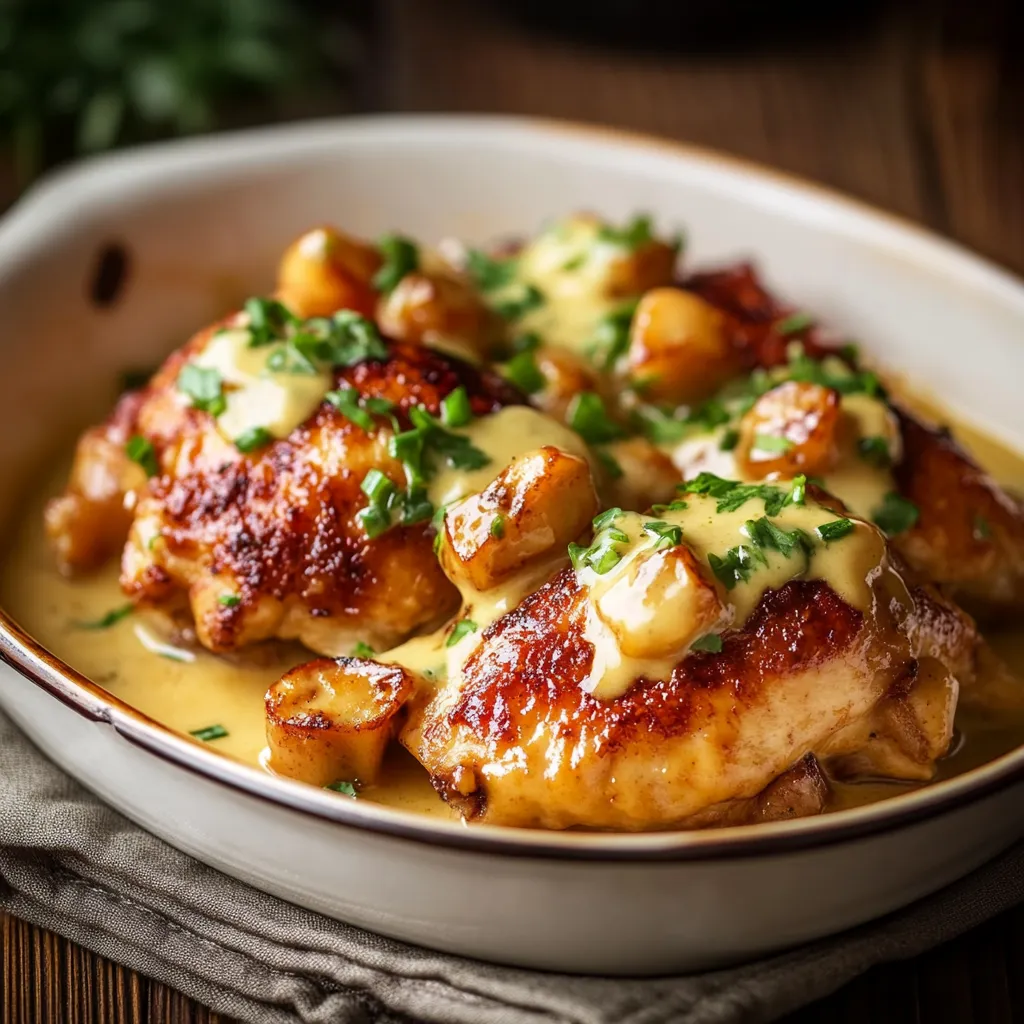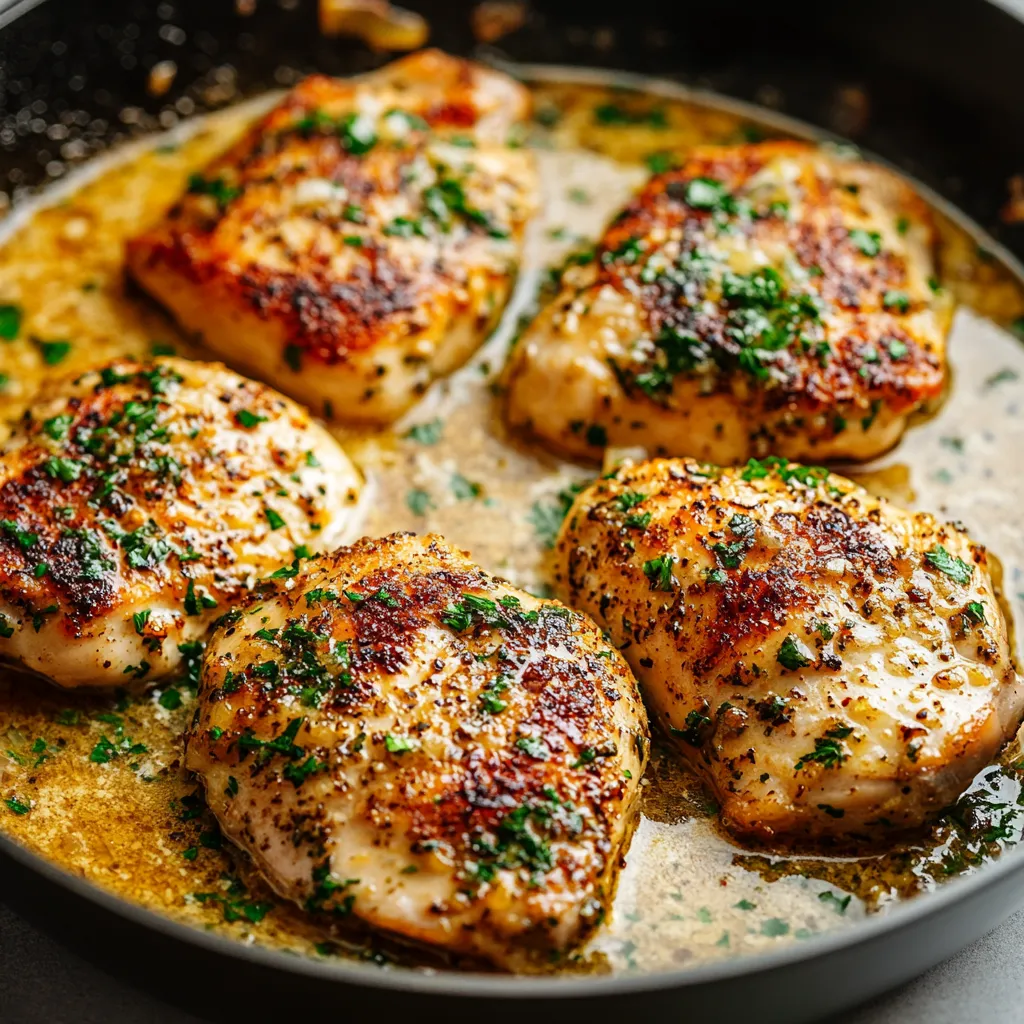
When you need dinner on the table fast but still want something that tastes impressive, this high protein garlic butter chicken skillet delivers restaurant-quality results in just 20 minutes. The golden-brown seared chicken paired with rich garlic butter sauce proves that simple ingredients can create extraordinary flavor.
This recipe relies on proper technique rather than a long ingredient list. The key is achieving that perfect golden crust on the chicken while keeping the inside juicy and tender, then building a quick pan sauce with butter and garlic that brings everything together beautifully.
With about 36 grams of protein per serving and minimal carbs, this dish works perfectly for anyone focused on high-protein eating or following a keto lifestyle. The entire meal cooks in one skillet, which means you’re not left with a sink full of dishes after dinner.
Why You’ll Love This Garlic Butter Chicken Skillet
The total time from start to finish is just 20 minutes, making this one of the fastest complete dinners you can make from scratch. The chicken cooks quickly because you pound it to even thickness first.
That golden-brown crust on the chicken creates incredible flavor through the Maillard reaction. The caramelized exterior adds depth that you simply can’t get from poaching or baking chicken without searing.
The garlic butter sauce is ridiculously simple but tastes luxurious. Just butter, garlic, and the flavorful browned bits from the pan create a sauce worthy of an upscale restaurant.
This recipe is naturally low-carb and keto-friendly without any modifications needed. You get all that rich, satisfying flavor without the carbs, making it perfect for various eating styles.
The technique you’ll learn here works for countless variations. Once you master this basic method, you can change up the seasonings and sauce ingredients endlessly.
Ingredients for High Protein Garlic Butter Chicken Skillet
I prefer boneless, skinless chicken breasts for this recipe because they cook quickly and provide excellent lean protein. The olive oil helps achieve that golden crust while the butter creates the signature rich sauce.
- 3 tbsp olive oil
- 1.5 lbs boneless, skinless chicken breasts (about 4), pounded to even thickness
- 1 to 2 tsp 21 Salute seasoning or poultry seasoning
- 1 tsp kosher salt (or to taste)
- 1 tsp freshly ground black pepper (or to taste)
- 1/2 cup white wine or chicken broth, as needed
- 3 tbsp unsalted butter (use more for extra sauce)
- 1 tbsp garlic, finely minced
- 2 tsp fresh parsley, chopped (optional, for garnish)
About the Key Ingredients
Pounding the chicken to even thickness is crucial for this recipe. I use a meat mallet or the bottom of a heavy skillet to flatten the thicker parts so the entire breast is about 1/2 inch thick. This ensures the chicken cooks evenly without drying out the thinner portions while waiting for the thick parts to finish.
Poultry seasoning or 21 Salute seasoning adds aromatic depth without requiring multiple individual spices. If you don’t have either, you can use a combination of dried thyme, sage, and rosemary. The blend creates that classic chicken flavor profile.
Fresh garlic is absolutely essential here rather than jarred minced garlic. The jarred stuff has a metallic, harsh flavor that becomes even more pronounced in a simple sauce like this. Fresh garlic mellows beautifully when cooked briefly in butter.
White wine deglazes the pan and adds subtle acidity that brightens the sauce. Use a dry white wine like Sauvignon Blanc or Pinot Grigio—nothing sweet. Chicken broth works perfectly if you prefer to skip alcohol.
Unsalted butter gives you better control over the salt level in the final dish. I use three tablespoons for a lighter sauce, but you can increase it to four or five tablespoons if you want more sauce to spoon over sides.
How to Make Garlic Butter Chicken Skillet
The secret to this recipe is patience during the searing process. I find that resisting the urge to move the chicken around allows that beautiful golden crust to develop properly.
- Place the chicken breasts between two pieces of plastic wrap or parchment paper. Using a meat mallet or the bottom of a heavy skillet, pound them to an even thickness of about 1/2 inch throughout. This step is crucial for even cooking.
- Season both sides of the chicken generously with poultry seasoning, kosher salt, and freshly ground black pepper. Make sure the seasonings cover the entire surface.
- Heat the olive oil in a large skillet over medium-high heat. The pan is ready when the oil shimmers and a drop of water sizzles immediately upon contact.
- Carefully add the chicken breasts to the skillet in a single layer without overcrowding. Leave space between the pieces—if necessary, cook in batches. Overcrowding steams the chicken instead of searing it.
- Cook the chicken completely undisturbed for about 5 minutes. Don’t peek, don’t move it, don’t press on it. Let the heat work its magic and create that golden-brown crust. You’ll know it’s ready to flip when the edges start to look opaque and the chicken releases easily from the pan.
- Flip the chicken breasts and cook for another 5 minutes on the second side. The chicken is done when the internal temperature reaches 165°F on an instant-read thermometer inserted into the thickest part. The juices should run clear when pierced.
- Remove the chicken from the skillet and place it on a clean plate. Tent loosely with foil to keep warm while you make the sauce. This resting time allows the juices to redistribute throughout the meat.
- Reduce the heat to medium and carefully pour in the white wine or chicken broth. It will sizzle and steam dramatically, so stand back slightly. Use a wooden spatula to scrape up all those delicious browned bits stuck to the bottom of the pan—that’s pure flavor.
- Let the liquid simmer for about 1 minute to reduce slightly and concentrate the flavor. It should reduce by about one-third.
- Add the butter to the skillet and stir continuously until it melts completely into the wine, creating a cohesive sauce. The sauce should look glossy and smooth.
- Stir in the minced garlic and cook for about 1 minute until fragrant and softened but not browned. Burnt garlic tastes bitter, so watch it carefully during this step.
- Turn off the heat and return the chicken breasts to the skillet along with any accumulated juices from the resting plate. Spoon the garlic butter sauce generously over the top of each piece.
- Garnish with fresh chopped parsley if desired for a pop of color and fresh herb flavor. Serve immediately while everything is hot.
Pro tip: If your sauce seems too thin, let it simmer for another minute or two. If it’s too thick or looks like it might break, add a tablespoon of wine or broth to bring it back together.
What to Serve with Garlic Butter Chicken Skillet
This richly flavored chicken pairs beautifully with sides that can soak up the delicious garlic butter sauce.
Creamy Mashed Potatoes: Classic choice that’s perfect for soaking up every drop of that garlic butter. The creamy texture complements the tender chicken beautifully.
Buttered Rice: Simple white or brown rice acts as a neutral base that lets the chicken shine. The rice absorbs the sauce without competing with it.
Linguine or Fettuccine: Toss pasta with some of the garlic butter sauce for an easy carb side. The wide noodles catch and hold the sauce in every bite.
Roasted Asparagus: Tender asparagus spears with a slight char add color and nutrition. The vegetal flavor balances the richness of the butter.
Sautéed Green Beans: Quick-cooked green beans with garlic echo the flavors in the chicken while adding a fresh element. They cook in the same amount of time as the chicken.
Cauliflower Mash: For a low-carb option, creamy cauliflower mash works perfectly. It mimics mashed potatoes while keeping the meal keto-friendly.
Caesar Salad: Crisp romaine with creamy dressing and Parmesan provides textural contrast. The cold, crunchy salad balances the warm, rich chicken.
Pro Tips & Variations
Use Chicken Thighs: Boneless, skinless chicken thighs stay even more moist than breasts and have richer flavor. Cook them the same way, but they’re more forgiving if slightly overcooked.
Add Lemon: Squeeze fresh lemon juice into the sauce just before serving for brightness. The acidity cuts through the richness and adds a restaurant-quality finish.
Make It Creamy: Stir in 2 to 3 tablespoons of heavy cream after adding the butter for a richer, creamier sauce. This creates something closer to a piccata-style sauce.
Add Herbs: Fresh thyme, rosemary, or oregano stirred into the sauce add aromatic complexity. Use about 1 teaspoon of fresh herbs or 1/2 teaspoon dried.
Include Mushrooms: Sauté sliced mushrooms in the pan after removing the chicken, then make the sauce. The mushrooms add earthiness and make the dish more substantial.
Boost the Garlic: If you’re a serious garlic lover, increase it to 2 tablespoons. The butter mellows the garlic, so more won’t be overwhelming.
Make It Spicy: Add 1/4 teaspoon of red pepper flakes to the sauce for gentle heat. A pinch of cayenne pepper works too.
Double the Sauce: Increase the butter to 5 tablespoons and the wine to 3/4 cup if you want extra sauce for spooning over sides. The sauce is the best part, so why not have more?
Storage & Reheating Tips
Store leftover chicken and sauce together in an airtight container in the refrigerator for up to 3 days. The butter will solidify when cold, which is completely normal.
Reheat gently in a skillet over low heat to restore the sauce to its smooth, liquid state. Add a splash of chicken broth or wine if the sauce seems too thick after refrigeration.
For microwave reheating, place the chicken in a microwave-safe dish, cover with a damp paper towel, and heat at 50% power in 1-minute intervals. This gentle approach prevents the chicken from becoming rubbery.
I don’t recommend freezing this dish because butter-based sauces don’t freeze well. The sauce will separate when thawed and won’t have the same smooth, glossy texture.
When meal prepping, slightly undercook the chicken by removing it at 160°F. It will reach 165°F during the resting time and won’t dry out when reheated.
Common Questions
Can I use bone-in chicken? A: Bone-in chicken requires longer cooking time, about 25 to 30 minutes total, which defeats the quick dinner purpose of this recipe. Stick with boneless for the 20-minute timeline.
What if I don’t have a meat mallet? A: Use the bottom of a heavy skillet, a rolling pin, or even a can of beans. Place the chicken between plastic wrap to prevent mess and pound gently but firmly.
Why is my chicken dry? A: Overcooking is the most common culprit. Use an instant-read thermometer to check for 165°F and remove the chicken immediately. Pounding to even thickness also helps prevent dry meat.
Can I skip the wine? A: Yes, chicken broth works perfectly as a substitute. The sauce will be slightly less complex but still delicious. You can also use white wine vinegar mixed with broth for acidity.
How do I prevent the garlic from burning? A: Add the garlic after the butter and cook it for just 1 minute off high heat. Fresh garlic burns quickly, so constant stirring and low heat are essential.
This high protein garlic butter chicken skillet proves that restaurant-quality dinners don’t require hours of cooking or complicated techniques. The perfectly seared chicken with its rich, aromatic sauce comes together faster than ordering takeout. Whether you’re cooking for family on a busy weeknight or making a quick but impressive meal for guests, this recipe delivers maximum flavor with minimal effort.
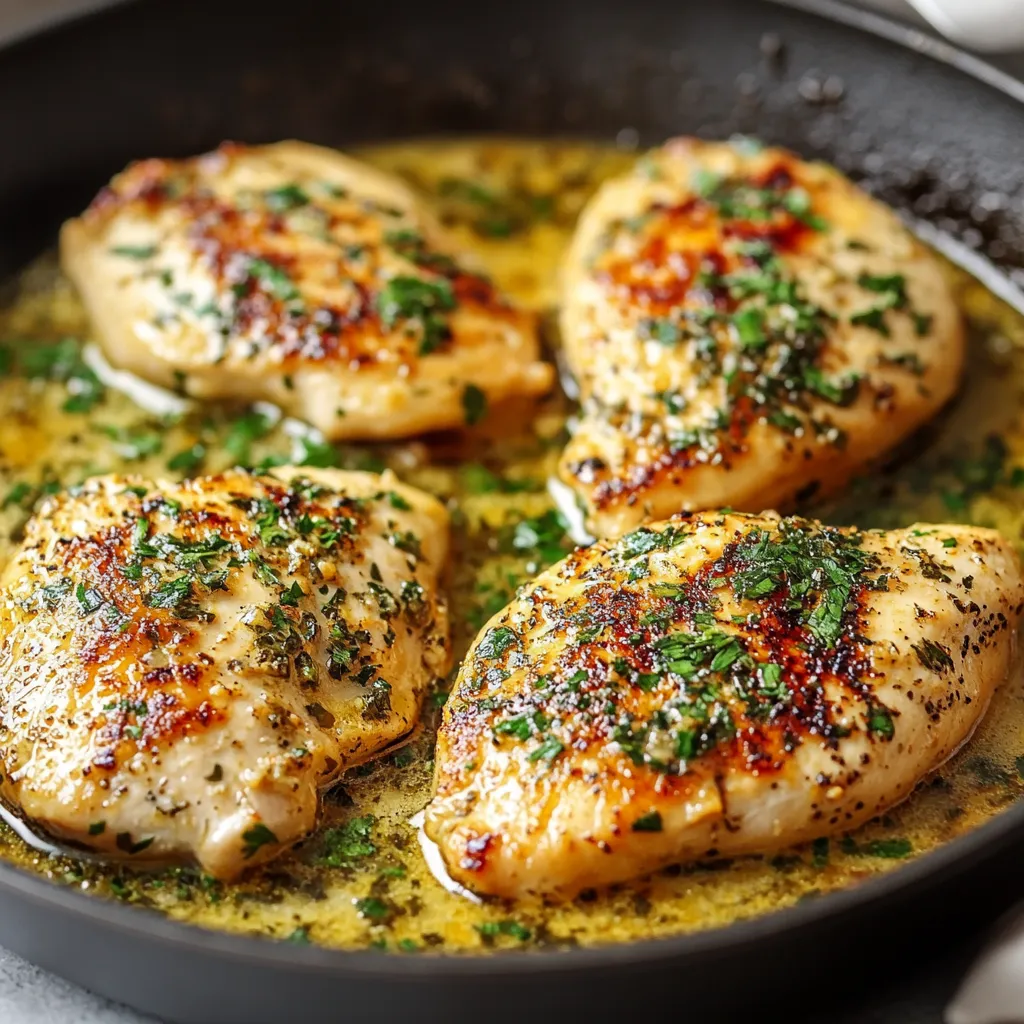
Garlic Butter Chicken (Easy 20-Minute Skillet Dinner)
Ingredients
Equipment
Method
- Place chicken breasts between plastic wrap or parchment paper. Using a meat mallet or heavy skillet, pound to an even thickness of about 1/2 inch throughout.
- Season both sides of chicken generously with poultry seasoning, kosher salt, and freshly ground black pepper.
- Heat olive oil in a large skillet over medium-high heat until shimmering.
- Add chicken breasts in a single layer without overcrowding. Cook undisturbed for about 5 minutes until a golden-brown crust forms and chicken releases easily from the pan.
- Flip chicken and cook for another 5 minutes, or until internal temperature reaches 165°F (74°C). Juices should run clear.
- Remove chicken from skillet and place on a clean plate. Tent loosely with foil to keep warm while making the sauce.
- Reduce heat to medium and carefully pour in white wine or chicken broth to deglaze the pan. Use a wooden spatula to scrape up the browned bits from the bottom.
- Let liquid simmer for about 1 minute to reduce by about one-third.
- Add butter to the skillet and stir continuously until it melts completely into the wine, creating a glossy, smooth sauce.
- Stir in minced garlic and cook for about 1 minute until fragrant and softened but not browned. Watch carefully to prevent burning.
- Turn off heat and return chicken breasts to the skillet along with any accumulated juices. Spoon the garlic butter sauce generously over the top of each piece.
- Garnish with fresh chopped parsley if desired and serve immediately.