Pineapple Chicken and Rice brings tropical island vibes to your weeknight dinner table with sweet pineapple, savory soy sauce, and tender chicken all tossed together in one pan. This is the kind of meal that tastes like you ordered takeout but comes together faster and healthier in your own kitchen. The glossy sauce coats every grain of rice while chunks of juicy pineapple and crisp bell peppers add pops of color and texture.
Perfect for those nights when you need something quick but crave flavors beyond the usual rotation, this recipe delivers that sweet-savory balance that makes Asian-inspired dishes so crave-worthy. The best part? Everything cooks in one pan, and you can have dinner ready in the time it takes to stream an episode of your favorite show.
Why You’ll Love This Pineapple Chicken and Rice
This recipe transforms basic ingredients into something that feels special and exciting without requiring any fancy techniques or hard-to-find items. The combination of sweet pineapple with salty soy sauce creates that addictive flavor profile that keeps you reaching for another bite, and the meal comes together so quickly you’ll actually have time to relax after dinner.
Using pre-cooked rice makes this a genuine 30-minute meal—perfect for using up leftover rice or grabbing a container of white rice from your favorite takeout spot. The one-pan method means minimal cleanup, and every component gets coated in that delicious sauce as it all cooks together. Kids tend to love the sweet pineapple element while adults appreciate the depth from garlic and soy.
The recipe is incredibly flexible and forgiving—swap proteins, adjust the sweetness level, add more vegetables, or make it spicier based on your preferences. It reheats beautifully for lunch the next day, and the flavors actually deepen overnight in the refrigerator. This is also naturally dairy-free and can easily be made gluten-free with the right soy sauce.
The vibrant colors make it visually appealing, and the tropical flavors feel like a mini vacation even on a random Tuesday. It’s substantially more satisfying than frozen meals but requires about the same amount of effort.
Ingredients for Pineapple Chicken and Rice
I always use low-sodium soy sauce to control the salt level since the sauce reduces and concentrates. When selecting pineapple, fresh is fantastic when available, but good-quality canned pineapple in juice works perfectly and saves prep time.
For the Chicken:
- 1 lb chicken breast, cut into pieces
- 2 tbsp olive or sesame oil
For the Sauce:
- 2 cloves garlic, minced
- ½ cup soy sauce (low sodium recommended)
- ⅓ cup pineapple juice
- 2 tbsp honey or brown sugar
- 1 tbsp rice vinegar (or apple cider vinegar)
- 1 tsp cornstarch mixed with 1 tbsp water
For the Main Dish:
- 1.5 cups cooked rice (white, jasmine, or brown)
- 1 cup pineapple chunks (fresh or canned)
- ½ red bell pepper, diced
- ¼ cup green onions, chopped
- Optional Toppings: sesame seeds, crushed red pepper flakes
About the Chicken: Cut chicken breasts into bite-sized pieces about 1 to 1½ inches for quick, even cooking. Chicken thighs work beautifully here too and stay even more moist—use the same amount of boneless, skinless thighs. For the quickest version, grab a rotisserie chicken and add the shredded meat at the end with the pineapple.
Rice Considerations: This recipe works best with day-old rice that’s been refrigerated, as it’s drier and less likely to clump. Freshly cooked rice tends to be too moist and can turn mushy when mixed with the sauce. White jasmine rice is my favorite for its slightly floral aroma that complements the tropical theme, but brown rice adds a nutty flavor and extra nutrition.
Oil Choice: Sesame oil adds authentic Asian flavor and a subtle nuttiness that regular olive oil can’t match. If you only have olive oil, that’s fine—consider adding a teaspoon of toasted sesame oil at the end for that characteristic flavor. Avoid using dark toasted sesame oil for cooking as it has a low smoke point and can burn.
Sauce Components: Low-sodium soy sauce is essential for controlling saltiness. If you only have regular soy sauce, reduce the amount to ⅓ cup and taste before adding more. The pineapple juice can come from canned pineapple or be fresh-squeezed. Rice vinegar provides mild acidity, but apple cider vinegar works as a substitute with a slightly sharper tang.
Pineapple Options: Fresh pineapple offers the best texture and brightest flavor. Cut it into chunks about ¾ inch in size. Canned pineapple chunks or tidbits in juice work perfectly—drain them well and reserve the juice for the sauce. Avoid pineapple canned in heavy syrup as it’s too sweet.
How to Make Pineapple Chicken and Rice
The key is building layers of flavor by cooking the chicken first, then making the sauce in the same pan to capture all those delicious browned bits. I find that preparing your sauce ingredients ahead makes the cooking process smooth and stress-free.
- Prep Your Ingredients: Cut the chicken breast into bite-sized pieces, roughly 1 to 1½ inches. Pat them dry with paper towels so they brown nicely rather than steam. Mince the garlic, dice the bell pepper, and chop the green onions. If using canned pineapple, drain it well and reserve some juice for the sauce. Have your cooked rice ready—if it’s refrigerated and clumpy, break it up gently with your hands. Mix the cornstarch with water in a small bowl to create your slurry.
- Cook the Chicken: Heat the oil in a large skillet or wok over medium-high heat until it shimmers. Add the chicken pieces in a single layer without crowding—work in batches if necessary to avoid steaming. Let them cook undisturbed for 2 to 3 minutes until the bottom develops a golden-brown crust. Flip and cook another 3 to 4 minutes until cooked through and the internal temperature reaches 165°F. The chicken should be lightly browned and no longer pink inside. Transfer the cooked chicken to a plate and set aside.
- Build the Sauce: In the same pan with all those flavorful browned bits, add the minced garlic. Sauté for about 30 seconds, stirring constantly until fragrant and just starting to turn golden. Don’t let it burn or it will taste bitter. Pour in the soy sauce, pineapple juice, honey, and rice vinegar. Stir well to combine and scrape up any browned bits stuck to the bottom of the pan—this adds tremendous flavor. Bring the mixture to a simmer over medium heat.
- Thicken the Sauce: Give your cornstarch slurry a quick stir to recombine it, then slowly pour it into the simmering sauce while stirring constantly. The sauce will begin to thicken almost immediately. Continue cooking and stirring for 2 to 3 minutes until the sauce reaches a glossy, syrupy consistency that coats the back of a spoon. If the sauce gets too thick, thin it with a tablespoon of water or pineapple juice.
- Combine Everything: Return the cooked chicken to the pan, stirring to coat each piece in the glossy sauce. Add the pineapple chunks and diced red bell pepper. Stir gently for about 1 minute until the pineapple is warmed through and the bell pepper softens slightly but still has some crunch. The pineapple should be hot but not cooked down—you want to maintain its texture.
- Add the Rice: Reduce the heat to medium-low. Add the cooked rice to the pan. Use a spatula or wooden spoon to gently fold the rice into the sauce, breaking up any clumps and ensuring every grain gets coated in that delicious sauce. Cook for 2 to 3 minutes, stirring occasionally, until the rice is heated through and has absorbed some of the sauce. The rice should be glossy and well-coated but not mushy.
- Finish and Serve: Remove the pan from heat. Taste and adjust seasoning—you might want a drizzle more soy sauce for saltiness or a touch more honey for sweetness. Sprinkle the chopped green onions over the top along with sesame seeds if using. Serve immediately while hot, offering red pepper flakes on the side for anyone who wants extra heat.
What to Serve with Pineapple Chicken and Rice
Since this is already a complete meal with protein, vegetables, and rice, you only need light sides that add different textures or temperatures. Focus on fresh, crisp elements that contrast with the warm, saucy main dish.
Cucumber Salad: A quick Asian cucumber salad with rice vinegar, sesame oil, and a pinch of sugar provides cool, crisp contrast to the warm, sweet rice. The refreshing crunch cleanses your palate between bites.
Steamed Edamame: Lightly salted steamed edamame makes a simple, protein-rich side that kids and adults both enjoy. It’s easy to prepare and adds a fresh element without competing with the main dish’s flavors.
Spring Rolls: Fresh spring rolls with shrimp or vegetables and a peanut dipping sauce add variety in texture and flavor. They’re light enough not to overwhelm but substantial enough to make the meal feel more complete.
Asian Slaw: A crunchy cabbage slaw dressed with rice vinegar, sesame oil, and a touch of honey echoes the Asian flavors while adding textural contrast. The cool, crisp slaw balances the warm, soft rice perfectly.
Egg Drop Soup: A simple egg drop soup or hot and sour soup makes a comforting starter that fits the Asian theme. It’s light and warming without filling you up before the main event.
Stir-Fried Bok Choy: Quick-cooked bok choy with garlic and a splash of soy sauce adds a green vegetable that’s tender-crisp and flavorful. It cooks in just a few minutes and complements the tropical flavors beautifully.
Wontons or Dumplings: Store-bought frozen dumplings or wontons make this feel like a complete Asian feast without much extra work. Steam or pan-fry them while the rice cooks, and serve with soy sauce for dipping.
Pro Tips & Variations
Day-Old Rice Trick: The absolute best rice for fried rice-style dishes is rice that’s been refrigerated overnight. Cold rice has firmer grains that separate easily and don’t turn mushy when mixed with sauce. If you only have fresh rice, spread it on a baking sheet and let it cool for 20 minutes, then refrigerate for at least 30 minutes before using.
Preventing Mushy Rice: Don’t over-stir once you add the rice. Fold it gently just until coated with sauce. Excessive stirring breaks up the grains and releases starch, making everything gummy. Also make sure your sauce isn’t too thin before adding rice—a properly thickened sauce coats the grains without making them soggy.
Achieving Better Browning: Make sure your chicken pieces are completely dry before adding them to the hot oil. Pat them with paper towels and let them sit for a minute. Don’t overcrowd the pan—if the pieces are touching, they’ll steam instead of sear. Work in batches if necessary.
Protein Variations: Shrimp works beautifully in place of chicken and cooks even faster—add peeled, deveined shrimp to the hot pan and cook for 2 to 3 minutes until pink. Pork tenderloin cut into thin strips or cubes also works. For vegetarian, use firm tofu cut into cubes, pressed to remove excess moisture, then pan-fried until golden.
Spicy Version: Add 1 teaspoon of Sriracha or sambal oelek to the sauce for a sweet-spicy combination that’s incredibly addictive. Fresh sliced jalapeños or Thai chilies added with the bell peppers provide heat and crunch. Crushed red pepper flakes stirred into the sauce work too.
Vegetable Additions: Snow peas, snap peas, broccoli florets, or carrots all work well here. Add harder vegetables like broccoli or carrots with the bell pepper so they have time to soften. Softer vegetables like snow peas should go in during the last minute of cooking.
Gluten-Free Option: Use tamari or coconut aminos instead of soy sauce for a gluten-free version. Check that your other ingredients like rice vinegar don’t contain gluten. The flavors remain authentic and delicious.
Storage & Reheating Tips
Store leftover Pineapple Chicken and Rice in airtight containers in the refrigerator for up to 3 days. The rice will absorb more sauce as it sits, so the texture will be slightly drier when cold but still delicious. I actually prefer the flavors after a day in the fridge as everything has time to meld.
This dish freezes reasonably well for up to 2 months, though the pineapple texture can become slightly softer after thawing. Cool completely before transferring to freezer-safe containers. Leave some headspace for expansion. Thaw overnight in the refrigerator before reheating.
For stovetop reheating, place the portion in a skillet over medium heat with 1 to 2 tablespoons of water or chicken broth to add moisture. Stir frequently and heat for 5 to 7 minutes until warmed through to 165°F. The added liquid helps restore the sauce’s consistency.
Microwave reheating works well for quick lunches. Transfer to a microwave-safe bowl and add a tablespoon of water. Cover loosely with a damp paper towel to prevent drying out. Microwave in 90-second intervals, stirring between each, until heated through. The rice may dry out slightly, so that splash of water is important.
Leftover Pineapple Chicken and Rice makes excellent fried rice—just heat oil in a hot pan, add the leftovers, and stir-fry until crispy on the edges. You can also use it as a filling for lettuce wraps, adding fresh vegetables and herbs for a lighter meal.
Common Questions
Can I use uncooked rice and cook everything together? While possible, I don’t recommend it for this recipe. Rice requires precise liquid ratios and timing that don’t work well with the other ingredients. The sauce is designed to coat pre-cooked rice, not cook it from scratch. For a true one-pot meal from raw rice, you’d need a different recipe structure.
Why is my sauce too thin or too thick? Sauce thickness depends on the cornstarch slurry. If too thin, make another small slurry with ½ teaspoon cornstarch and 1 tablespoon water, add it to the simmering sauce, and cook another minute. If too thick, add pineapple juice or water one tablespoon at a time until it reaches desired consistency.
Can I use frozen pineapple? Yes, but thaw it completely and drain thoroughly before using. Frozen pineapple releases a lot of liquid as it thaws, which can make your dish watery if not drained. Pat the pieces dry with paper towels before adding to the pan.
What if I don’t have rice vinegar? Apple cider vinegar is the closest substitute with its mild acidity. Use slightly less—about 2 teaspoons instead of a tablespoon as it’s a bit sharper. White wine vinegar also works. In a pinch, fresh lime juice adds nice acidity with a tropical twist.
How do I know when the chicken is done? The chicken is done when it reaches an internal temperature of 165°F on an instant-read thermometer. Visually, it should be opaque throughout with no pink remaining. Cut into the thickest piece to check—the juices should run clear, not pink.
Can I make this less sweet? Reduce the honey to 1 tablespoon or omit it entirely if you prefer a more savory dish. The pineapple provides natural sweetness, so you may not need additional sugar. You can also increase the soy sauce slightly and add a splash more vinegar for a tangier, less sweet profile.
This Pineapple Chicken and Rice delivers restaurant-quality flavors in your own kitchen with minimal fuss and maximum reward. The sweet pineapple paired with savory soy creates that perfect balance that makes every bite interesting. Give this one a try when you want to shake up your weeknight routine with something bright, flavorful, and genuinely fun to eat.
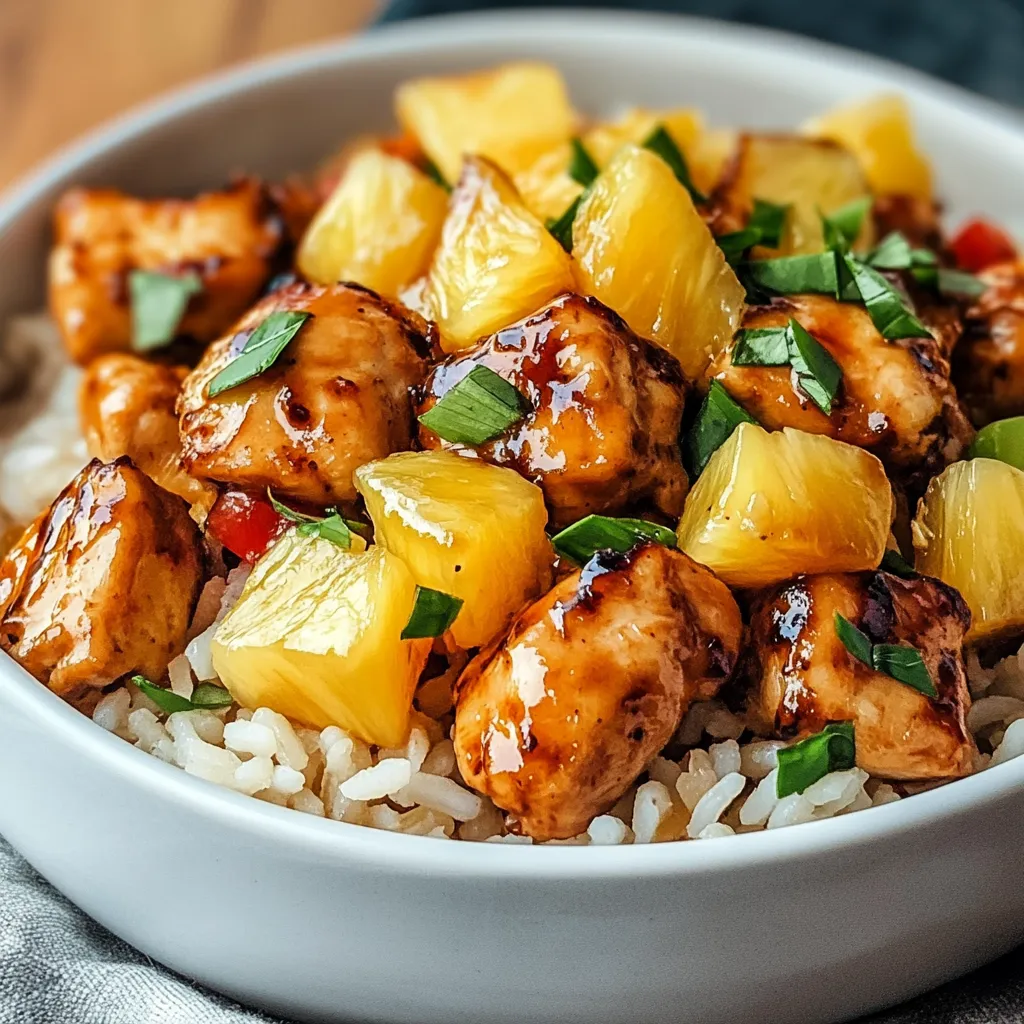
Pineapple Chicken and Rice
Ingredients
Equipment
Method
- Cut chicken breast into bite-sized pieces about 1 to 1.5 inches. Pat dry with paper towels. Mince garlic, dice bell pepper, chop green onions. Drain pineapple if using canned, reserving juice. Have cooked rice ready. Mix cornstarch with 1 tablespoon water in small bowl.
- Heat oil in large skillet or wok over medium-high heat until shimmering. Add chicken pieces in single layer without crowding. Cook undisturbed for 2 to 3 minutes until bottom is golden brown. Flip and cook 3 to 4 minutes more until cooked through to 165°F and no longer pink. Transfer to plate.
- In same pan with browned bits, add minced garlic. Sauté for 30 seconds, stirring constantly, until fragrant and just starting to turn golden. Pour in soy sauce, pineapple juice, honey, and rice vinegar. Stir to combine and scrape up browned bits. Bring to simmer over medium heat.
- Stir cornstarch slurry to recombine, then slowly pour into simmering sauce while stirring constantly. Continue cooking and stirring for 2 to 3 minutes until sauce is glossy, syrupy, and coats the back of a spoon.
- Return cooked chicken to pan, stirring to coat with sauce. Add pineapple chunks and diced red bell pepper. Stir gently for 1 minute until pineapple is warmed and bell pepper softens slightly but retains crunch.
- Reduce heat to medium-low. Add cooked rice to pan. Gently fold rice into sauce using spatula, breaking up clumps and ensuring every grain is coated. Cook 2 to 3 minutes, stirring occasionally, until rice is heated through and has absorbed some sauce.
- Remove from heat. Taste and adjust seasoning if needed. Sprinkle chopped green onions and sesame seeds over top. Serve immediately while hot, with red pepper flakes on side for those who want heat.