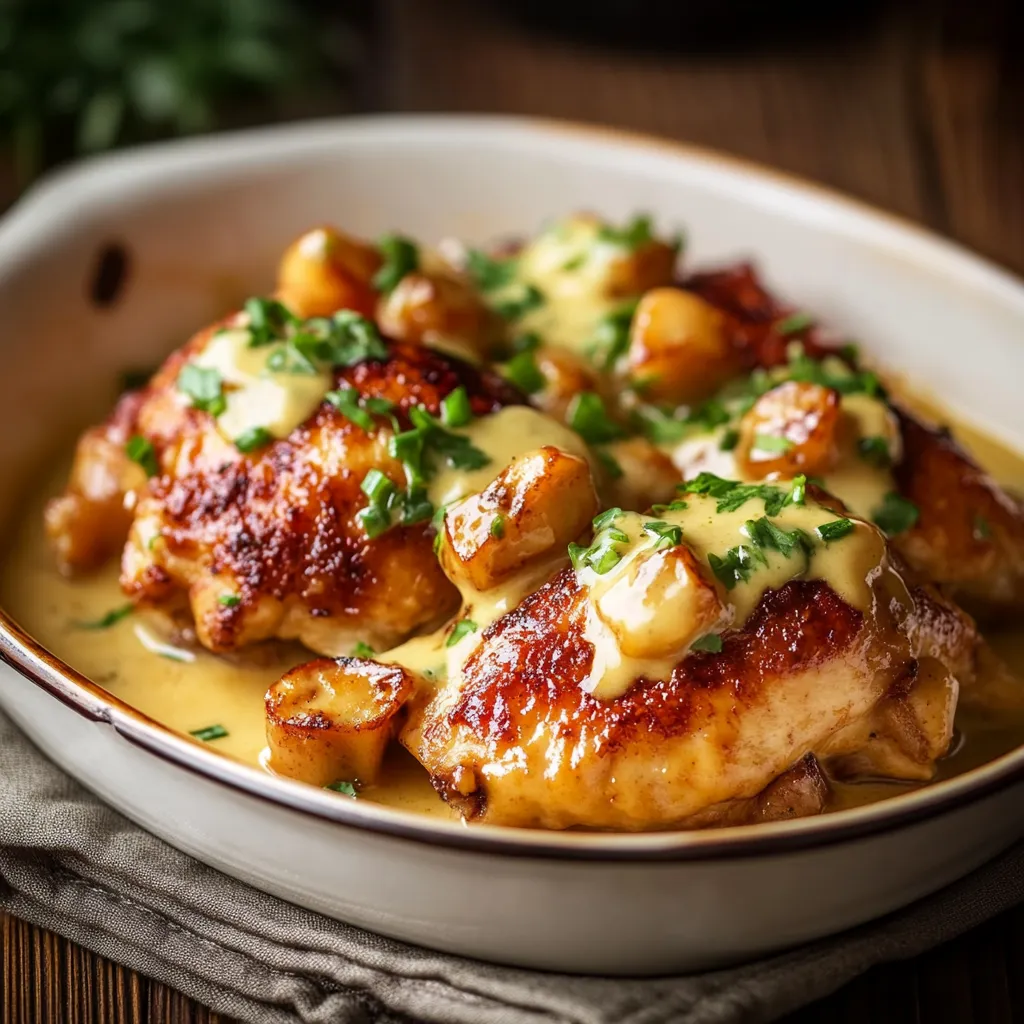
French Onion Pot Roast combines everything you love about classic French Onion Soup with the heartiness of a Sunday roast. Tender beef chuck slowly braises in a rich, caramelized onion gravy that’s deep, savory, and just slightly sweet. This is the kind of dinner that makes your house smell like a cozy bistro and brings everyone to the table asking what’s for dinner before you even call them.
Perfect for Sunday family dinners or when you want something impressive without the fuss, this pot roast does most of the work itself in the oven. The patience required for caramelizing the onions pays off in spades with a gravy so flavorful, you’ll want to serve it over everything. And the best part? It tastes even better the next day.
Why You’ll Love This French Onion Pot Roast
This recipe delivers restaurant-quality results with straightforward home cooking techniques. The chuck roast becomes incredibly tender after its long braise, practically falling apart at the touch of a fork. Those caramelized onions create a gravy that’s rich and complex without needing a long list of ingredients.
The hands-on time is minimal—most of the cooking happens unattended in the oven while you go about your day. It’s an excellent make-ahead option since the flavors deepen overnight in the refrigerator. Leftovers reheat beautifully, and the meat shreds easily for sandwiches or serving over mashed potatoes.
Families appreciate how this turns an affordable cut of beef into something special. The onion gravy appeals even to picky eaters, and you can easily adjust the recipe to feed a crowd by adding another roast to the pot.
Ingredients for French Onion Pot Roast
I always start with a well-marbled chuck roast because the fat keeps everything moist during the long cooking time. When selecting onions, look for firm yellow onions without soft spots—you’ll need a lot of them, and they’re the star of the gravy.
- 3 lb boneless beef chuck roast, trimmed
- 6 large yellow onions, thinly sliced (about 12 cups)
- 4 cloves garlic, minced
- 3 tbsp all-purpose flour
- 1 cup dry red wine (or beef broth)
- 2 ½ cups low-sodium beef broth
- 5 sprigs fresh thyme (plus more for garnish)
- 2 dried bay leaves
- 3 tbsp olive oil, divided
- Kosher salt and black pepper, to taste
About the Beef: Chuck roast is ideal because it has enough marbling to stay tender during braising. If your roast has a thick fat cap, trim it down to about ¼ inch—some fat adds flavor, but too much makes the gravy greasy.
Onion Choices: Yellow onions are my go-to for their balance of sweetness and savory depth when caramelized. You can substitute with sweet onions if you prefer a mellower flavor, but avoid red onions as they don’t caramelize as nicely. Slice them as thin as possible for faster, more even caramelization.
Wine Selection: A dry red wine like Cabernet Sauvignon or Merlot adds beautiful depth, but if you prefer not to use alcohol, substitute with an equal amount of beef broth plus a splash of balsamic vinegar for acidity.
How to Make French Onion Pot Roast
The key is building layers of flavor, starting with a good sear on the beef and taking the time to properly caramelize those onions. In my experience, rushing the onions results in a gravy that lacks the rich, sweet complexity that makes this dish special.
- Prep and Sear the Roast: Preheat your oven to 325°F. Remove the roast from the refrigerator 30 minutes before cooking to take the chill off. Pat it completely dry with paper towels—moisture prevents browning. Season all sides generously with kosher salt and black pepper. Heat 1 tablespoon olive oil in a large Dutch oven over medium-high heat until shimmering. Sear the roast for about 5 minutes per side until a deep golden-brown crust forms. Don’t move it around—let it develop that crust. Transfer to a plate and set aside.
- Caramelize the Onions: This is where patience pays off. Reduce the heat to medium and add the remaining 2 tablespoons oil to the pot. Add all those sliced onions—yes, the pot will be overflowing, but they’ll cook down significantly. Cover with a lid and cook for 5 minutes to soften and release moisture. Remove the lid and continue cooking, stirring every few minutes, for 30 to 40 minutes. The onions should turn a rich amber-brown color and reduce to about one-third of their original volume. If they start sticking, add a splash of broth to deglaze.
- Build the Flavor Base: Stir in the minced garlic and cook for 1 minute until fragrant—watch carefully so it doesn’t burn. Sprinkle the flour over the onions and stir constantly for another minute. This flour will thicken the gravy and give it body.
- Deglaze and Add Liquid: Pour in the red wine, scraping the bottom of the pot with a wooden spoon to release all those flavorful browned bits. Let it simmer for 2 minutes to cook off the alcohol. Add the beef broth, thyme sprigs, and bay leaves, stirring to combine.
- Braise the Roast: Return the seared roast and any accumulated juices to the pot, nestling it into the onion mixture. The liquid should come about halfway up the sides of the roast. Bring everything to a gentle simmer on the stovetop, then cover tightly with the lid.
- Slow Cook to Perfection: Transfer the covered Dutch oven to your preheated oven. Braise for 3 to 3½ hours, checking once halfway through. The roast is done when a fork slides in easily and the meat pulls apart with minimal effort. If it still feels firm, give it another 30 minutes.
- Finish and Serve: Remove the pot from the oven and discard the bay leaves and thyme stems. Use two forks to shred the beef directly into the onion gravy, or slice it thickly if you prefer. Taste the gravy and adjust seasoning with additional salt and pepper if needed.
What to Serve with French Onion Pot Roast
This rich, savory roast pairs beautifully with sides that can soak up that incredible onion gravy. Start with something starchy to balance the meal.
Creamy Mashed Potatoes: Classic mashed potatoes are perfect for soaking up every drop of gravy. The smooth, buttery texture complements the tender beef, and you can make them extra indulgent with cream cheese or sour cream stirred in.
Garlic Butter Egg Noodles: Wide egg noodles tossed with butter and fresh parsley offer a simple, comforting base. They’re quick to prepare while the roast finishes cooking and provide the perfect vehicle for that rich onion sauce.
Roasted Root Vegetables: Carrots, parsnips, and baby potatoes roasted with olive oil and thyme add earthy sweetness and a slight caramelized edge that echoes the onions in the roast.
Crusty French Bread: A warm baguette is essential for mopping up the gravy. Toast thick slices and rub them with garlic butter, or top with melted Gruyère for a true French Onion experience.
Green Beans Almondine: Crisp-tender green beans with toasted almonds and lemon provide a bright, fresh contrast to the rich, hearty roast. The acidity cuts through the gravy beautifully.
Simple Mixed Greens Salad: A light salad with a tangy vinaigrette balances the meal’s richness. Keep it simple with mixed greens, cherry tomatoes, and a red wine vinaigrette that ties into the braising liquid.
Pro Tips & Variations
Make-Ahead Strategy: Caramelize the onions up to 2 days ahead and store them in an airtight container in the refrigerator. This cuts your active cooking time significantly on the day you want to serve the roast. You can also make the entire dish a day in advance—the flavors improve overnight.
Achieving Perfect Caramelization: The key to deeply caramelized onions is medium heat and patience. If your onions aren’t browning after 20 minutes, increase the heat slightly. A pinch of sugar can help them along, but it’s not necessary with this much onion naturally present.
Cheese Topping: For the ultimate French Onion treatment, top individual servings with toasted baguette slices and thick slices of Gruyère or Swiss cheese. Place under the broiler for 2 to 3 minutes until the cheese is melted and bubbly.
Slow Cooker Adaptation: After caramelizing the onions and searing the beef on the stovetop, transfer everything to a slow cooker. Cook on low for 6 to 8 hours or high for 4 to 5 hours until the meat is tender.
Protein Swaps: This method works beautifully with bone-in short ribs or a beef brisket. Adjust cooking time based on the size and thickness of the cut—brisket may need an additional hour.
Lighter Version: Use a leaner cut like sirloin roast and reduce the oil to 2 tablespoons total. Skip the flour and thicken the gravy at the end with a cornstarch slurry if desired.
Storage & Reheating Tips
Store leftover pot roast and gravy together in an airtight container in the refrigerator for up to 4 days. The flavors meld beautifully overnight, making leftovers even more delicious. I find that portioning the meat and gravy into individual containers makes reheating quicker on busy weeknights.
For longer storage, freeze in freezer-safe containers for up to 3 months. Let it cool completely before freezing, and leave about an inch of headspace for expansion. Thaw overnight in the refrigerator before reheating.
Reheat on the stovetop over medium-low heat, adding a splash of beef broth if the gravy has thickened too much. You can also reheat individual portions in the microwave, covering loosely and stirring halfway through. The oven works well too—place in a covered baking dish at 325°F for 20 to 30 minutes until heated through.
Leftover pot roast makes incredible French Dip sandwiches. Pile the shredded beef on toasted hoagie rolls, top with melted provolone, and serve the onion gravy on the side for dipping.
Common Questions
Can I make this without wine? Absolutely. Replace the red wine with an equal amount of beef broth plus 1 tablespoon of balsamic vinegar or red wine vinegar. This maintains the acidity that balances the rich gravy without the alcohol.
Why are my onions not caramelizing? Onions need consistent medium heat and time to caramelize properly. If your heat is too low, they’ll soften but not brown. If it’s too high, they’ll burn. Make sure to stir regularly and scrape the bottom of the pot to redistribute the sugars.
Can I use a different cut of beef? Chuck roast is ideal because of its marbling and connective tissue that breaks down during braising. Brisket works well but may need additional cooking time. Avoid lean cuts like sirloin tip, as they’ll dry out during the long cooking process.
How do I know when the roast is done? The meat should be fork-tender, meaning a fork slides in with little resistance and the meat pulls apart easily. If you meet resistance or the meat feels firm, it needs more time. Every roast is slightly different, so rely on tenderness rather than exact timing.
Can I double this recipe? Yes, but use two separate pots or braise two roasts side by side in a large roaster. Doubling everything in one pot makes it difficult to achieve proper browning and even cooking.
This French Onion Pot Roast delivers comforting, bistro-style flavors right from your own kitchen. The combination of tender beef and that deeply flavored onion gravy creates a dinner worth gathering around the table for. Give this one a try on your next lazy Sunday—your family will be asking for it again and again.
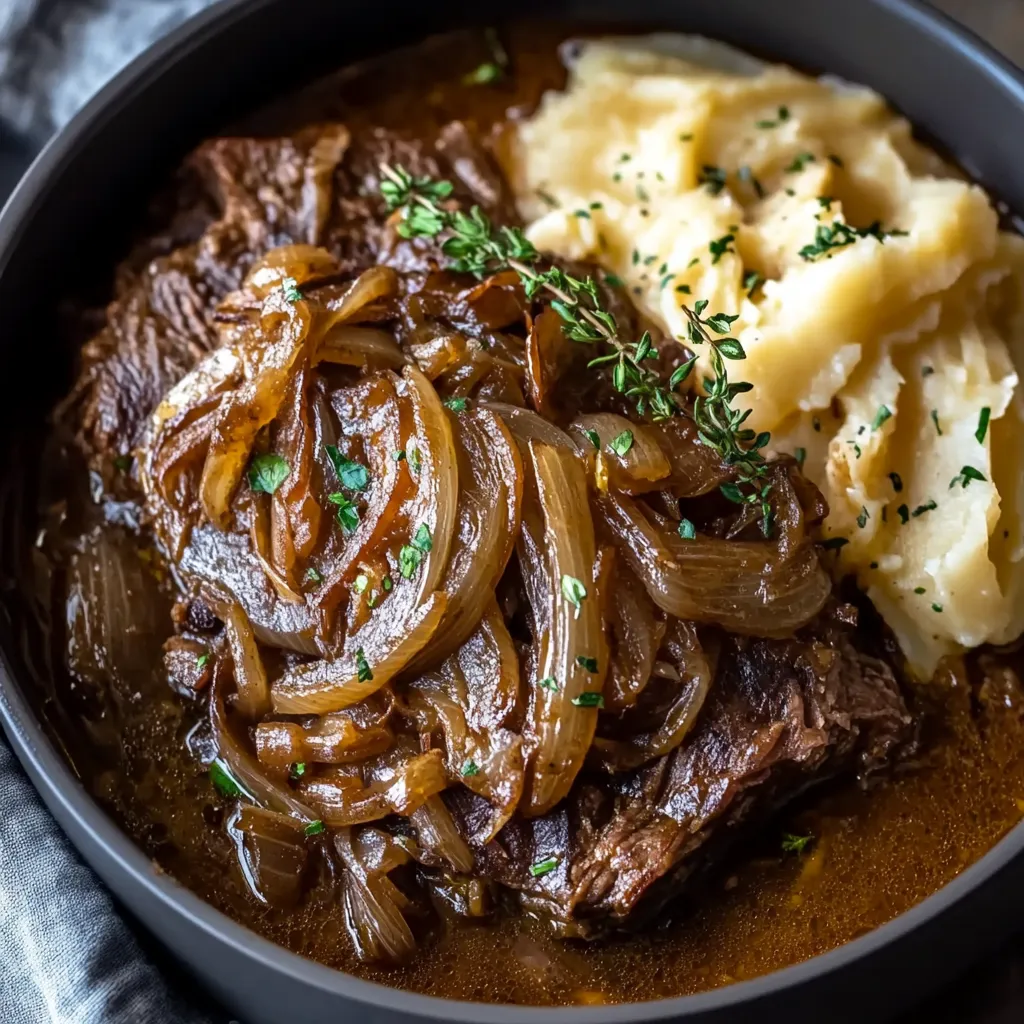
French Onion Pot Roast
Ingredients
Equipment
Method
- Preheat oven to 325°F. Pat the roast dry with paper towels and season generously with salt and pepper on all sides.
- Heat 1 tablespoon olive oil in a large Dutch oven over medium-high heat. Sear the roast for about 5 minutes per side until deep golden-brown. Transfer to a plate.
- Reduce heat to medium. Add remaining 2 tablespoons oil and all sliced onions to the pot. Cover and cook for 5 minutes to soften.
- Uncover and continue cooking, stirring frequently, for 30 to 40 minutes until onions are deeply caramelized and amber-brown in color.
- Stir in minced garlic and cook for 1 minute. Sprinkle flour over the onions and stir constantly for another minute.
- Pour in red wine, scraping the bottom of the pot to release browned bits. Let simmer for 2 minutes.
- Add beef broth, thyme sprigs, and bay leaves. Stir to combine.
- Return the roast and any accumulated juices to the pot. Bring to a simmer, cover with lid, and transfer to the oven.
- Braise for 3 to 3½ hours until the meat is fork-tender and pulls apart easily.
- Remove from oven and discard bay leaves and thyme stems. Shred the beef into the onion gravy using two forks, or slice thickly. Adjust seasoning with salt and pepper.