When you need a flavorful dinner that comes together faster than ordering delivery, this korean ground beef bowl delivers every single time. The savory-sweet beef seasoned with ginger, garlic, and soy sauce creates a satisfying base that pairs beautifully with fluffy rice and crisp vegetables. This recipe works perfectly for those hectic weeknights when you’re short on time but still want something homemade and delicious, and it’s versatile enough to customize based on what you have in your refrigerator.
The beauty of this dish lies in its simplicity and speed. You can have dinner on the table in just 20 minutes using basic ingredients and one skillet. The ground beef cooks quickly and absorbs all those wonderful Asian-inspired flavors, while the fresh vegetables add crunch and brightness that balance the rich meat. It’s the kind of meal that feels like takeout but costs a fraction of the price and tastes even better.
Why You’ll Love This Korean Ground Beef Bowl
This recipe comes together in just 20 minutes total, with only 10 minutes of actual cooking time. The ingredient list is short and straightforward, using pantry staples you probably already have on hand. Everything cooks in one skillet, which means minimal cleanup when dinner is done. This makes it ideal for busy weeknights when you’re juggling multiple responsibilities and need dinner fast.
Ground beef provides an affordable protein that cooks quickly and thoroughly without any special techniques required. The simple sauce made from soy sauce, brown sugar, ginger, and garlic transforms plain beef into something crave-worthy without requiring a long list of specialty ingredients. Families appreciate how the mild, slightly sweet flavors appeal to both adults and children, though you can easily add heat for those who want it.
The meal prep potential is outstanding. You can batch cook the beef at the beginning of the week and assemble fresh bowls in minutes throughout the week. The components store well separately, and the beef actually tastes better after the flavors have had time to meld. From a budget perspective, ground beef remains one of the most economical proteins, and the other ingredients are inexpensive staples that stretch your grocery dollars.
Ingredients for Korean Ground Beef Bowl
I prefer using 90/10 or 93/7 lean ground beef because it has enough fat for flavor without leaving excessive grease that needs draining. For the ginger, fresh makes a noticeable difference compared to ground, adding bright, zingy flavor that really shines in this simple preparation. Freshly minced garlic from whole cloves tastes better than jarred varieties, which can have a slightly metallic aftertaste.
For the Beef Mixture:
- 1 pound Ground Beef
- 1 tablespoon Soy Sauce
- 1 tablespoon Brown Sugar
- 1 tablespoon Ginger, fresh
- 2 cloves Garlic, minced
For the Vegetables:
- 1 cup Sliced Cucumbers
- 1 cup Shredded Carrots
- 2 cups Sautéed Spinach
For Serving:
- 2 cups Rice
- 1 tablespoon Sesame Seeds
- 2 tablespoons Chopped Green Onions
Low-sodium soy sauce gives you better control over the saltiness of the final dish, which is important since ground beef can vary in its natural sodium content. Brown sugar adds a subtle sweetness that balances the salty soy sauce, though honey or maple syrup work just as well if that’s what you have. The vegetables provide freshness and crunch that contrast beautifully with the savory beef and soft rice.
Choose rice based on your preference and dietary needs. White rice cooks fastest, brown rice adds nutrition and a nutty flavor, and cauliflower rice keeps things low-carb. Jasmine rice brings a lovely fragrant quality that complements the Asian flavors. Sesame seeds add a subtle nutty flavor and visual appeal, while green onions provide a fresh, sharp bite that brightens every forkful.
How to Make Korean Ground Beef Bowl
The secret to great flavor in this quick dish is properly browning the beef and not rushing the aromatics. I’ve found that letting the garlic and ginger cook just until fragrant makes all the difference in building depth despite the short cooking time.
1. Brown the Beef: Heat a large skillet over medium heat without adding any oil since the beef will release its own fat as it cooks. Add the ground beef to the hot skillet and use a wooden spoon or spatula to break it into small crumbles. Cook for 5 to 7 minutes, stirring occasionally and breaking up any large chunks, until the meat is completely browned with no pink remaining. If you’re using higher-fat ground beef and there’s excessive grease in the pan, carefully drain most of it off, leaving just a tablespoon or two for flavor.
2. Add the Aromatics: Reduce the heat to medium-low and add the minced ginger and garlic to the cooked beef. Stir constantly for about 1 minute until the garlic turns golden and both aromatics become incredibly fragrant. Watch carefully during this step since garlic can burn quickly, which would make it taste bitter.
3. Create the Sauce: Pour in the soy sauce and sprinkle the brown sugar over the beef mixture. Stir everything together thoroughly, making sure the sugar dissolves completely and coats all the beef evenly. Cook for another 1 to 2 minutes, stirring frequently, until the sauce becomes glossy and slightly thickened. The beef should look shiny and well-coated. Taste and adjust seasoning if needed, adding more soy sauce for saltiness or more brown sugar for sweetness.
4. Prepare the Rice: While the beef cooks, prepare your rice according to package instructions. For white rice, combine 1 cup of rice with 2 cups of water in a pot, bring to a boil, then reduce to low, cover, and simmer for 15 to 18 minutes until tender and fluffy. Brown rice takes longer, about 40 to 45 minutes. For fastest results, use instant rice or leftover rice from the refrigerator, which just needs a quick reheat.
5. Prep the Vegetables: While everything cooks, slice the cucumbers into thin rounds or half-moons. Shred the carrots using a box grater or julienne peeler. For the spinach, heat a small pan with a touch of oil over medium heat and add the spinach leaves. Sauté for 1 to 2 minutes, stirring constantly, until just wilted but still bright green. Season with a pinch of salt.
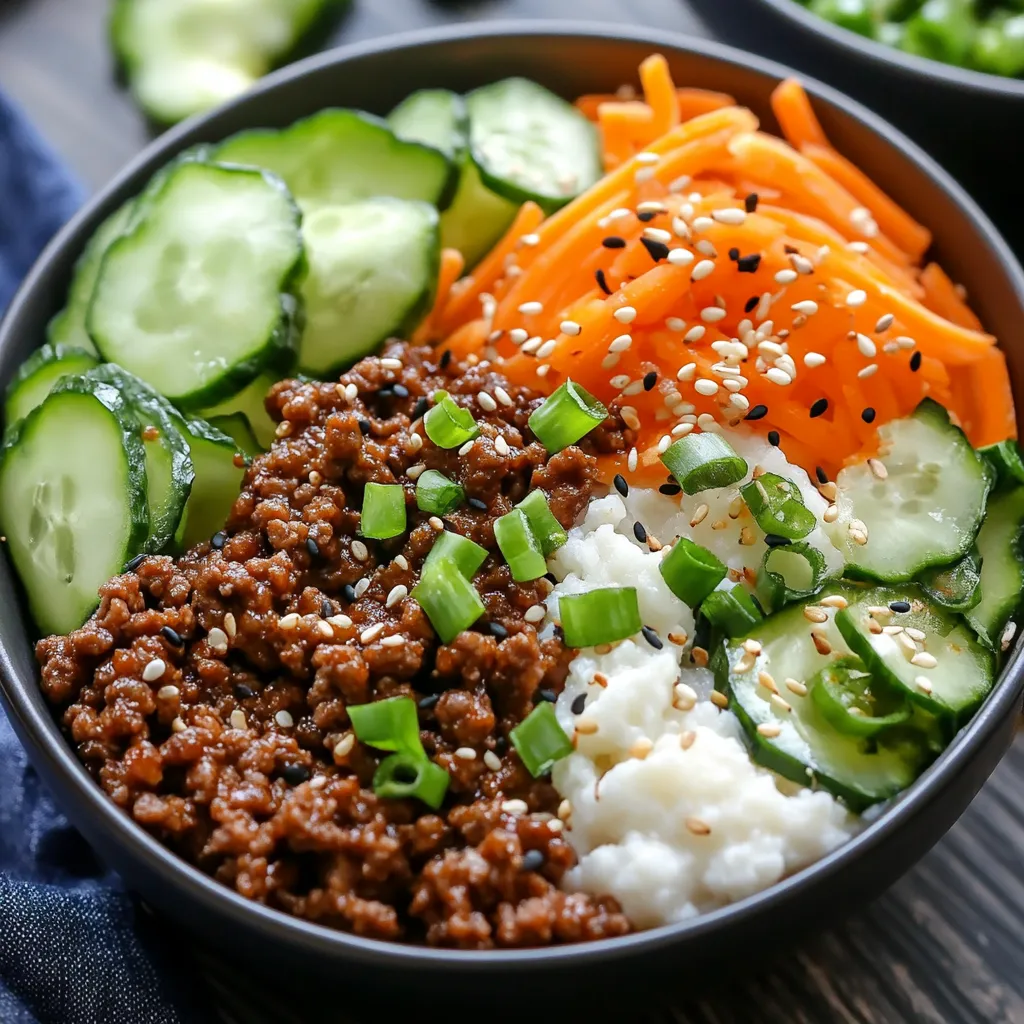
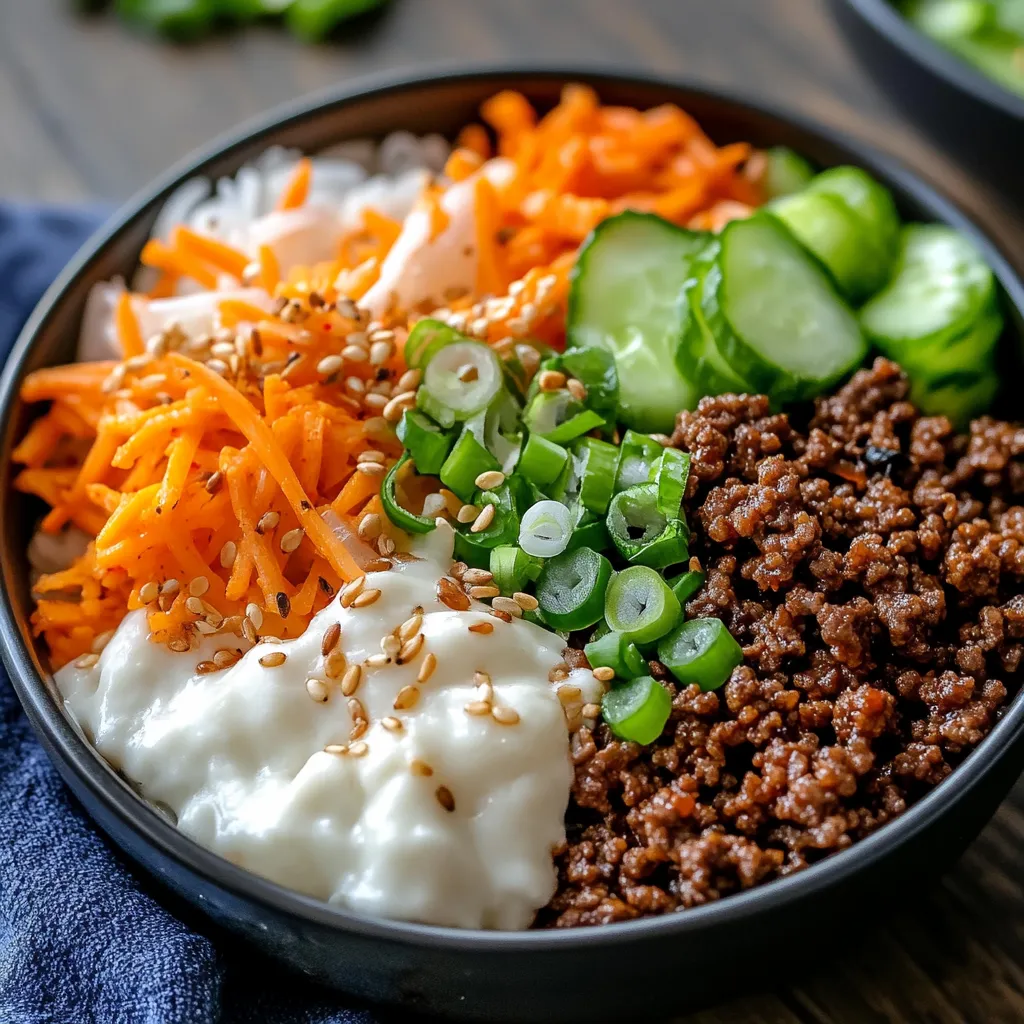
6. Assemble the Bowls: Divide the cooked rice among four bowls, spreading it across the bottom to create a base. Top each portion of rice with a generous scoop of the Korean ground beef, arranging it in the center. Add the sliced cucumbers, shredded carrots, and sautéed spinach around the beef, keeping each vegetable separate for visual appeal. Sprinkle sesame seeds over the entire bowl and finish with chopped green onions.
The finished beef should look glossy and caramelized, with visible flecks of ginger and garlic throughout. The vegetables should be vibrant and fresh-looking, providing colorful contrast to the brown beef and white rice.
What to Serve with Korean Ground Beef Bowl
Since this bowl already includes rice and vegetables, you’ll want sides that add different flavors and textures rather than more bulk.
Kimchi: Traditional fermented cabbage kimchi brings tangy, spicy, probiotic-rich flavor that cuts through the richness of the beef. The crunchy texture and bold taste provide an authentic Korean element that elevates the whole meal.
Pickled Vegetables: Quick-pickled cucumbers, radishes, or daikon add bright acidity and crunch. The vinegary tang balances the sweet-savory beef beautifully and cleanses your palate between bites.
Fried Egg: A sunny-side-up egg with a runny yolk adds richness and protein. When you break the yolk, it creates a luxurious sauce that coats the rice and beef, making every bite even more delicious.
Edamame: Lightly salted steamed edamame provides a simple side that adds extra protein and a fun, interactive eating experience. The mild flavor complements rather than competes with the bold beef.
Seaweed Salad: Tangy, slightly sweet seaweed salad brings ocean flavor and a slippery texture that contrasts nicely with the ground beef. It’s light and refreshing, adding variety to the bowl.
Miso Soup: A warm bowl of miso soup on the side creates a more complete meal and adds comforting warmth. The savory, umami-rich broth pairs perfectly with the Korean flavors.
Cucumber Salad: Thinly sliced cucumbers tossed with rice vinegar, sesame oil, and a pinch of sugar provide cooling crunch that balances the savory beef.
Pro Tips & Variations
Flavor Boost: Add a teaspoon of toasted sesame oil to the beef mixture at the very end for authentic nutty flavor. A splash of rice vinegar also adds brightness that enhances all the other flavors.
Heat Options: Stir in a tablespoon of gochujang (Korean chili paste) with the soy sauce for authentic spicy-sweet flavor. Red pepper flakes or sriracha drizzled on top work for customizable heat levels.
Make-Ahead Strategy: Cook a double batch of the beef mixture on Sunday and portion it into containers for easy weekday lunches. Store rice and vegetables separately, then assemble fresh bowls in minutes.
Time-Saving Shortcuts: Use pre-shredded carrots, pre-washed spinach, and instant rice to cut prep time to almost nothing. You can also use leftover rice from takeout or previous meals.
Protein Swaps: Ground turkey or ground chicken work beautifully for a leaner option. Ground pork adds richness and authentic Korean flavor. For vegetarian bowls, use crumbled firm tofu or plant-based ground meat.
Rice Alternatives: Swap rice for quinoa, farro, or cauliflower rice based on your dietary preferences. Each base brings different nutritional benefits and textures while still supporting the flavorful beef.
Vegetable Variations: Use whatever vegetables you have on hand. Bell peppers, snap peas, edamame, mushrooms, broccoli, or zucchini all work well. The key is having a mix of textures and colors.
Sauce Enhancement: For more complexity, add a teaspoon of oyster sauce or hoisin sauce along with the soy sauce. These add depth and umami that make the beef taste even more special.
Storage & Reheating Tips
Store leftover beef in an airtight container in the refrigerator for up to four days. I recommend storing the components separately for best results. Keep the beef in one container, rice in another, and the fresh vegetables in a third container. This prevents the vegetables from getting soggy and maintains the best texture for each element.
For reheating the beef, use the microwave on medium power for 1 to 2 minutes, stirring halfway through, until heated through. On the stovetop, warm it in a skillet over medium-low heat for 3 to 4 minutes, adding a splash of water or soy sauce if it seems dry. The rice reheats well in the microwave with a damp paper towel over it to add moisture, or you can steam it briefly in a covered pot.
The cooked beef mixture freezes beautifully for up to three months. Portion it into individual servings in freezer-safe containers or bags, removing as much air as possible to prevent freezer burn. Thaw overnight in the refrigerator before reheating. The rice can also be frozen separately in portions for quick meal assembly.
Transform leftovers into entirely different meals. Use the beef as a filling for lettuce wraps with fresh herbs and cucumbers. Stuff it into bell peppers with cheese and bake until tender. Toss it with noodles and vegetables for a quick stir-fry. Make breakfast bowls by topping the beef and rice with a fried egg and avocado.
Common Questions
Can I use ground ginger instead of fresh? Yes, though fresh ginger provides the best flavor. If using ground ginger, substitute with 1 teaspoon instead of 1 tablespoon fresh. Add it with the soy sauce rather than sautéing it, since ground spices can burn easily.
Is this recipe gluten-free? It can be with a simple swap. Use tamari instead of regular soy sauce to make it gluten-free. Check your other ingredients to ensure they don’t contain hidden gluten, though this recipe is naturally very adaptable.
How do I make this spicier? Add gochujang (Korean chili paste) to the beef mixture, stir in red pepper flakes, or drizzle finished bowls with sriracha or your favorite hot sauce. Start with a small amount and adjust to your preferred heat level.
Can I prep this for the week? Absolutely. Cook the beef mixture at the beginning of the week and portion it into containers. Cook rice in batches and store separately. Prep vegetables as needed throughout the week for the freshest results, or prep everything at once for maximum convenience.
What’s the best way to prevent mushy rice? Use the correct water-to-rice ratio and don’t lift the lid while it’s cooking. Let it rest covered for 5 minutes after cooking, then fluff with a fork. For brown rice, ensure you’re using the appropriate cooking time and liquid amount.
This korean ground beef bowl brings satisfying flavors and textures together in a way that rivals any takeout order but comes together in a fraction of the time and cost. The savory-sweet beef over fluffy rice with crisp vegetables creates a balanced meal that feels complete and nourishing. Give this a try when you need dinner fast but don’t want to sacrifice flavor or quality.
Quick & Easy Korean Ground Beef Bowl
Ingredients
Equipment
Method
- Heat a large skillet over medium heat. Add ground beef and cook for 5-7 minutes, breaking it apart with a wooden spoon, until completely browned with no pink remaining. Drain excess grease if needed, leaving about 1 tablespoon in the pan.
- Reduce heat to medium-low. Add minced ginger and garlic to the beef. Stir constantly for about 1 minute until garlic turns golden and becomes fragrant, being careful not to burn.
- Pour in soy sauce and sprinkle brown sugar over the beef mixture. Stir thoroughly until sugar dissolves and coats all the beef. Cook for 1-2 minutes, stirring frequently, until sauce becomes glossy and slightly thickened.
- While beef cooks, prepare rice according to package instructions. Slice cucumbers, shred carrots, and sauté spinach in a separate small pan with a touch of oil for 1-2 minutes until just wilted.
- Divide cooked rice among four bowls. Top each with a generous scoop of Korean ground beef in the center. Arrange sliced cucumbers, shredded carrots, and sautéed spinach around the beef. Sprinkle with sesame seeds and chopped green onions.